Pucks and Hobgoblins: The Household Spirits
Explore English folklore and domestic spirits like Pucks and Hobgoblins in this B1 level reading comprehension and vocabulary worksheet.
Pucks and Hobgoblins: The Household Spirits
Explore English folklore and domestic spirits like Pucks and Hobgoblins in this B1 level reading comprehension and vocabulary worksheet.
Title
Pucks and Hobgoblins: The Household SpiritsSeo_intro
Explore English folklore and domestic spirits like Pucks and Hobgoblins in this B1 level reading comprehension and vocabulary worksheet.
Reading Text
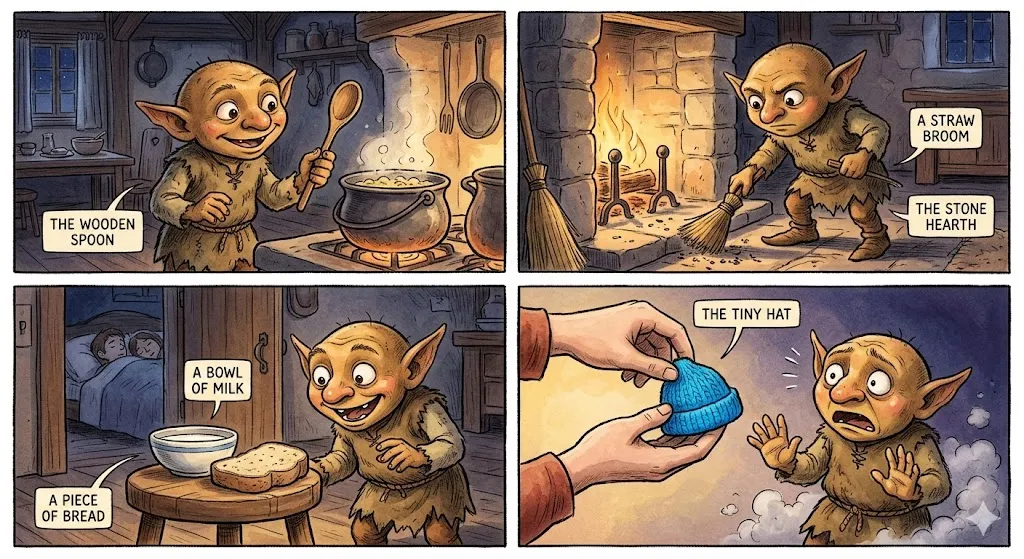
In the rich tapestry of English folklore, not all magical beings dwell in deep forests or under grassy hills. Some of the most fascinating creatures are said to live right inside human homes. These are known by various names such as Pucks, Brownies, or Hobgoblins. Unlike the grand and aloof High Elves, these household spirits are small, earthy, and intensely focused on the domestic lives of the families they choose to live with. Hobgoblins are famous for being particularly mischievous—a term used to describe their love for playing harmless yet annoying tricks on people. According to old legends, these spirits were often seen as helpful guardians of the home. If a family was hardworking and kind, a Hobgoblin might reward them by performing difficult chores overnight. They were known to sweep the hearth, churn the cream into butter, or even fix broken farming tools while the household slept. To keep a Hobgoblin happy, a family would traditionally leave a small offering of thanks, such as a bowl of creamy milk or a fresh piece of bread left by the fireplace. However, there were very specific rules for interacting with these invisible helpers. One of the most important taboos was the gift of clothing. While a human might think a new shirt or a tiny hat is a kind gesture, a Hobgoblin would feel deeply insulted by such a gift. Legends say that receiving clothes would cause the spirit to feel either too grand to work or so offended that it would leave the house forever, never to return. If a family was lazy, messy, or disrespectful, the spirit’s personality would shift. Instead of helping, they would become a nuisance. They might sour the milk, hide sets of keys in impossible places, or make loud, clattering noises in the middle of the night to prevent the family from sleeping. The most famous representative of this spirit type is Puck, also known as Robin Goodfellow, from William Shakespeare’s famous play, A Midsummer Night's Dream. Puck is the ultimate trickster, serving as a reminder that the boundary between the human and spirit worlds is always thin. These stories ultimately served as a way to encourage people to be tidy, diligent, and respectful of the unseen forces in their lives.
Activities
Vocabulary
- Text: Causing a little trouble in a playful way.
- Text: Relating to the running of a home or family relations.
- Text: People who protect or watch over something.
- Text: Routine tasks, especially household ones.
- Text: The floor of a fireplace.
- Text: A contribution or gift given as a sign of gratitude.
- Text: Social or religious customs prohibiting a particular practice.
- Text: To feel disrespected or treat with a lack of courtesy.
- Text: A person, thing, or circumstance causing inconvenience.
- Text: Showing care and conscientiousness in one's work.
- Label: mischievousAnswer: A
- Label: domesticAnswer: B
- Label: guardiansAnswer: C
- Label: choresAnswer: D
- Label: hearthAnswer: E
- Label: offeringAnswer: F
- Label: taboosAnswer: G
- Label: insultedAnswer: H
- Label: nuisanceAnswer: I
- Label: diligentAnswer: J
- Before: The kitten is veryAfter: and likes to hide my socks.Answer: mischievous
- Before: I have severalAfter: to finish, like washing dishes and vacuuming.Answer: chores
- Before: In many cultures, there are strictAfter: about what you can say to spirits.Answer: taboos
- Before: The cat sat by the warmAfter: to stay cozy during the winter.Answer: hearth
- Before: He feltAfter: when they didn't thank him for his hard work.Answer: insulted
- Before: If you areAfter: in your studies, you will surely succeed.Answer: diligent
- Before: A loud car alarm in the middle of the night is a realAfter: .Answer: nuisance
- Before: The family left a smallAfter: of fruit on the altar.Answer: offering
- Before: They act as theAfter: of the ancient forest.Answer: guardians
- Before: She enjoys the peacefulAfter: life of gardening and cooking.Answer: domestic
- Text: to be generatedAnswer: Some spirits live inside your house.
- Text: to be generatedAnswer: They help with the daily chores.
- Text: to be generatedAnswer: Never give a shirt to them.
- Text: to be generatedAnswer: Puck is a very famous trickster.
- Text: to be generatedAnswer: Always leave a bowl of milk.
Comprehension
- Text: Where do Pucks and Hobgoblins typically live according to the text?Options:
- In deep forests
- Under grassy hills
- Inside human homes
- In grand palaces
Answer: Inside human homes - Text: Hobgoblins were known to help families by performing chores while the family slept.Answer: true
- Text: What is the result of giving a Hobgoblin a gift of clothing?Options:
- They will work faster
- They will feel insulted and leave
- They will ask for more clothes
- They will become a high elf
Answer: They will feel insulted and leave - Text: Puck is a character in a play by which famous author?Options:
- Charles Dickens
- William Shakespeare
- J.R.R. Tolkien
- Jane Austen
Answer: William Shakespeare - Text: If a family was messy or lazy, the spirit might sour the milk or hide keys.Answer: true
Written Expression
- Text: Would you want a helpful but mischievous Hobgoblin living in your house? Why or why not?
- Text:
Describe a mythical creature or spirit from your own culture that is known for helping or tricking people.
Examples:
- I would love a Hobgoblin because I hate doing the dishes, but I would be afraid of offending it!
- In my country, we have stories of 'Duendes' who hide small objects if the house is not clean.
Recommended for You
Are Organic Foods Really Healthier?
Explore the debate over organic food, comparing nutritional benefits, farming standards, and costs for intermediate Engl...
How Pigs and Ducks Stay Healthy on the Farm
Explore how pigs and ducks use unique body adaptations like mud, feathers, and webbed feet to survive and thrive in thei...
A Helping Hand at the Pond
Read a story about Pig and Duck working together to rescue a stuck toy truck by the pond. Includes vocabulary, reading c...