El Misterio de las Esferas
Immerse yourself in Costa Rican culture with this A2 Spanish mystery. Follow Elena and Carlos as they uncover the secrets of the ancient Diquís stone spheres.
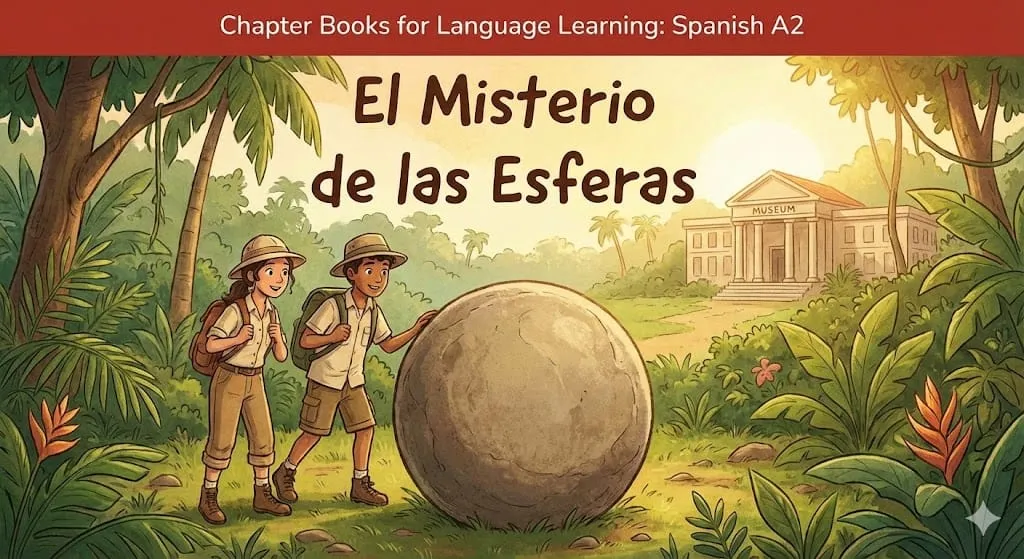
Title
El Misterio de las EsferasLanguage
esSubtitle
A Spanish A2 Chapter BookChapters
- Title: Capítulo 1: Llegada a San JoséContent:
Elena miró por la ventana del avión. Debajo, el Valle Central brillaba con muchas luces. El avión aterrizó en el aeropuerto Juan Santamaría en Alajuela, cerca de San José. Elena estaba muy emocionada. Era su primera vez en Costa Rica.
Al salir del aeropuerto, el aire era cálido. Su amigo Carlos la esperaba con una sonrisa grande. «¡Bienvenida a Costa Rica, Elena!» dijo él. Carlos era un guía turístico y conocía todos los secretos del país. Elena quería ver las famosas esferas de piedra. «¿Estamos listos para la aventura?» preguntó ella. Carlos tomó sus maletas y asintió. «Sí, mañana viajamos al sur.»
Translation:Elena looked out the airplane window. Below, the Central Valley shone with many lights. The plane landed at Juan Santamaría Airport in Alajuela, near San José. Elena was very excited. It was her first time in Costa Rica. Upon leaving the airport, the air was warm. Her friend Carlos was waiting for her with a big smile. "Welcome to Costa Rica, Elena!" he said. Carlos was a tour guide and knew all the secrets of the country. Elena wanted to see the famous stone spheres. "Are we ready for the adventure?" she asked. Carlos took her bags and nodded. "Yes, tomorrow we travel to the south."
Quiz:- Question: 1. ¿Dónde aterrizó el avión?Options:
- Text: a) En LiberiaValue: wrong
- Text: b) En AlajuelaValue: correct
- Text: c) En PanamáValue: wrong
- Question: 2. ¿Cuál es la profesión de Carlos?Options:
- Text: a) Es pilotoValue: wrong
- Text: b) Es arqueólogoValue: wrong
- Text: c) Es guía turísticoValue: correct
- Question: 3. Verdadero o Falso: Elena ha visitado Costa Rica antes.Options:
- Text: VerdaderoValue: wrong
- Text: FalsoValue: correct
- Title: Capítulo 2: El Autobús al SurContent:
A la mañana siguiente, Elena y Carlos fueron a la estación de autobuses. Compraron boletos para viajar a la Zona Sur. El autobús era cómodo y tenía aire acondicionado. El viaje fue largo pero muy hermoso.
Subieron por el «Cerro de la Muerte», una montaña muy alta. Hacía frío y había mucha neblina. Elena vio plantas grandes y bosques verdes. Después de unas horas, bajaron hacia la costa. El paisaje cambió. Ahora hacía calor y se veían palmeras. «Ya casi llegamos al delta del Diquís,» explicó Carlos. Elena miraba el mapa, ansiosa por llegar a su destino.
Translation:The next morning, Elena and Carlos went to the bus station. They bought tickets to travel to the Southern Zone. The bus was comfortable and had air conditioning. The trip was long but very beautiful. They went up the "Cerro de la Muerte" (Mountain of Death), a very high mountain. It was cold and there was a lot of fog. Elena saw large plants and green forests. After a few hours, they descended toward the coast. The landscape changed. Now it was hot and palm trees could be seen. "We are almost at the Diquís delta," Carlos explained. Elena looked at the map, eager to arrive at her destination.
Quiz:- Question: 1. ¿Cómo se llama la montaña alta?Options:
- Text: a) Cerro de la VidaValue: wrong
- Text: b) Cerro de la MuerteValue: correct
- Text: c) Volcán ArenalValue: wrong
- Question: 2. ¿Cómo cambió el clima al bajar a la costa?Options:
- Text: a) Hacía más fríoValue: wrong
- Text: b) Empezó a nevarValue: wrong
- Text: c) Hacía calorValue: correct
- Question: 3. ¿Hacia dónde viajaban?Options:
- Text: a) Al norteValue: wrong
- Text: b) Al delta del DiquísValue: correct
- Text: c) A la playa de GuanacasteValue: wrong
- Title: Capítulo 3: Palmar SurContent:
El autobús llegó a Palmar Norte. Tuvieron que cruzar un puente grande sobre el río Térraba para llegar a Palmar Sur. Este pueblo era pequeño y tranquilo. Hace muchos años, era un centro importante para las compañías bananeras.
Las casas eran antiguas y de madera, con jardines llenos de flores tropicales. La humedad era alta. Elena sintió el calor en su piel. «Aquí la vida es más lenta,» comentó Carlos. Dejaron sus mochilas en un pequeño hotel familiar. El dueño les ofreció agua fría. «Mañana visitaremos Finca 6,» prometió Carlos. Finca 6 es el sitio arqueológico principal.
Translation:The bus arrived in Palmar Norte. They had to cross a big bridge over the Térraba River to get to Palmar Sur. This town was small and quiet. Many years ago, it was an important center for banana companies. The houses were old and made of wood, with gardens full of tropical flowers. The humidity was high. Elena felt the heat on her skin. "Life is slower here," Carlos commented. They left their backpacks at a small family hotel. The owner offered them cold water. "Tomorrow we will visit Finca 6," promised Carlos. Finca 6 is the main archaeological site.
Quiz:- Question: 1. ¿Qué río cruzaron?Options:
- Text: a) El río TérrabaValue: correct
- Text: b) El río AmazonasValue: wrong
- Text: c) El río ColoradoValue: wrong
- Question: 2. ¿De qué material eran las casas antiguas?Options:
- Text: a) De ladrilloValue: wrong
- Text: b) De maderaValue: correct
- Text: c) De piedraValue: wrong
- Question: 3. Verdadero o Falso: Palmar Sur es una ciudad muy grande y ruidosa.Options:
- Text: VerdaderoValue: wrong
- Text: FalsoValue: correct
- Title: Capítulo 4: El Parque de las EsferasContent:
Temprano, caminaron hacia el Museo de Finca 6. El sol brillaba fuerte. Al entrar al sitio, Elena se detuvo. Delante de ella, en el césped verde, había varias esferas de piedra gris.
Eran perfectamente redondas. Algunas eran pequeñas, como una pelota de fútbol. Otras eran enormes, más altas que una persona. «¿Cómo las hicieron?» susurró Elena, asombrada. No había herramientas de metal en esa época. Las esferas estaban alineadas de una manera especial. Parecían guardar un secreto antiguo. Elena tocó la superficie de una piedra. Estaba suave y caliente por el sol.
Translation:Early, they walked toward the Finca 6 Museum. The sun was shining brightly. Upon entering the site, Elena stopped. In front of her, on the green grass, were several gray stone spheres. They were perfectly round. Some were small, like a soccer ball. Others were huge, taller than a person. "How did they make them?" whispered Elena, amazed. There were no metal tools in that era. The spheres were aligned in a special way. They seemed to keep an ancient secret. Elena touched the surface of a stone. It was smooth and hot from the sun.
Quiz:- Question: 1. ¿Cómo eran las esferas?Options:
- Text: a) CuadradasValue: wrong
- Text: b) Perfectamente redondasValue: correct
- Text: c) TriangularesValue: wrong
- Question: 2. ¿De qué tamaño eran las esferas más grandes?Options:
- Text: a) Más altas que una personaValue: correct
- Text: b) Pequeñas como una manzanaValue: wrong
- Text: c) Del tamaño de un cocheValue: wrong
- Question: 3. ¿Qué herramienta no existía en esa época?Options:
- Text: a) Herramientas de piedraValue: wrong
- Text: b) Herramientas de maderaValue: wrong
- Text: c) Herramientas de metalValue: correct
- Title: Capítulo 5: La ArqueólogaContent:
En el museo, conocieron a la Dra. Vargas. Ella era una arqueóloga experta. Llevaba un sombrero y ropa de color caqui. «Hola,» dijo ella amablemente. «Estas esferas son del periodo precolombino.»
La doctora explicó que el pueblo Diquís creó estas esculturas entre el año 300 y 1500 después de Cristo. «Usaron piedras de otros ríos lejanos,» explicó la Dra. Vargas. «Las transportaron y las picaron con otras piedras más duras.» Elena escuchaba con atención. Era un trabajo muy difícil y largo. Requería mucha paciencia y conocimiento matemático. Elena admiraba la inteligencia de los antiguos habitantes.
Translation:In the museum, they met Dr. Vargas. She was an expert archaeologist. She wore a hat and khaki clothes. "Hello," she said kindly. "These spheres are from the pre-Columbian period." The doctor explained that the Diquís people created these sculptures between the year 300 and 1500 AD. "They used stones from other distant rivers," explained Dr. Vargas. "They transported them and pecked them with other harder stones." Elena listened attentively. It was very difficult and long work. It required a lot of patience and mathematical knowledge. Elena admired the intelligence of the ancient inhabitants.
Quiz:- Question: 1. ¿Quién es la Dra. Vargas?Options:
- Text: a) Una turistaValue: wrong
- Text: b) Una arqueólogaValue: correct
- Text: c) La dueña del hotelValue: wrong
- Question: 2. ¿Qué cultura creó las esferas?Options:
- Text: a) Los AztecasValue: wrong
- Text: b) Los DiquísValue: correct
- Text: c) Los IncasValue: wrong
- Question: 3. Verdadero o Falso: Usaron máquinas modernas para mover las piedras.Options:
- Text: VerdaderoValue: wrong
- Text: FalsoValue: correct
- Title: Capítulo 6: La Leyenda IndígenaContent:
Después de la explicación científica, Carlos le contó a Elena una leyenda. «Hay historias mágicas sobre las piedras,» dijo él. Se sentaron bajo la sombra de un árbol de mango.
«Algunas personas creían que las esferas venían de la Atlántida,» dijo Carlos riendo. «Pero la leyenda indígena dice que el dios Tara usaba su cerbatana para tirar bolas de piedra a los dioses del viento y los huracanes.» Elena imaginó la escena. También existía el mito de que las esferas tenían oro adentro. Por eso, muchas fueron destruidas en el pasado. «Es una historia triste,» dijo Elena.
Translation:After the scientific explanation, Carlos told Elena a legend. "There are magical stories about the stones," he said. They sat under the shade of a mango tree. "Some people believed that the spheres came from Atlantis," said Carlos laughing. "But the indigenous legend says that the god Tara used his blowgun to shoot stone balls at the gods of wind and hurricanes." Elena imagined the scene. There was also a myth that the spheres had gold inside. Because of that, many were destroyed in the past. "It is a sad story," said Elena.
Quiz:- Question: 1. ¿Qué herramienta usaba el dios Tara en la leyenda?Options:
- Text: a) Un arcoValue: wrong
- Text: b) Una cerbatanaValue: correct
- Text: c) Una espadaValue: wrong
- Question: 2. ¿Por qué destruyeron algunas esferas en el pasado?Options:
- Text: a) Buscaban oro adentroValue: correct
- Text: b) Eran feasValue: wrong
- Text: c) Ocupaban mucho espacioValue: wrong
- Question: 3. ¿Dónde se sentaron a hablar?Options:
- Text: a) En el autobúsValue: wrong
- Text: b) Bajo un árbol de mangoValue: correct
- Text: c) En un restauranteValue: wrong
- Title: Capítulo 7: Un Almuerzo TicoContent:
Tenían mucha hambre. Fueron a una «soda» cerca del parque. Una soda es un restaurante pequeño y típico de Costa Rica. El lugar olía delicioso.
Elena pidió un «casado». Es el plato tradicional del almuerzo. El plato tenía arroz, frijoles negros, plátano maduro frito, ensalada y pescado. Carlos le pasó una botella de salsa. «Tienes que probar la Salsa Lizano,» dijo él. «Es el sabor de Costa Rica.» Elena puso un poco de salsa sobre el arroz. ¡Estaba riquísimo! Para beber, pidieron fresco de cas, una fruta ácida y refrescante.
Translation:They were very hungry. They went to a "soda" near the park. A soda is a small, typical restaurant in Costa Rica. The place smelled delicious. Elena ordered a "casado". It is the traditional lunch dish. The plate had rice, black beans, fried sweet plantain, salad, and fish. Carlos passed her a bottle of sauce. "You have to try Lizano Sauce," he said. "It is the flavor of Costa Rica." Elena put a little sauce on the rice. It was delicious! To drink, they ordered fresco de cas, a sour and refreshing fruit drink.
Quiz:- Question: 1. ¿Qué es una «soda» en Costa Rica?Options:
- Text: a) Una bebida gaseosaValue: wrong
- Text: b) Un restaurante pequeño y típicoValue: correct
- Text: c) Una fiestaValue: wrong
- Question: 2. ¿Qué ingrediente NO estaba en el casado de Elena?Options:
- Text: a) EspaguetisValue: correct
- Text: b) ArrozValue: wrong
- Text: c) Plátano maduroValue: wrong
- Question: 3. ¿Cómo se llama la salsa famosa?Options:
- Text: a) Salsa PicanteValue: wrong
- Text: b) Salsa de TomateValue: wrong
- Text: c) Salsa LizanoValue: correct
- Title: Capítulo 8: La ExploraciónContent:
Por la tarde, decidieron caminar cerca del río. Querían ver el entorno natural. El camino era de tierra y había un poco de barro porque llovió brevemente.
Escucharon monos aulladores en los árboles. «¡Gritan muy fuerte!» exclamó Elena. Vieron pájaros de colores brillantes. De repente, Carlos señaló al suelo. Había una esfera semi-enterrada en la orilla del río. No estaba en el museo, estaba en la naturaleza. Elena se sintió como una verdadera exploradora. La selva estaba reclamando la historia. Era una conexión directa con el pasado.
Translation:In the afternoon, they decided to walk near the river. They wanted to see the natural environment. The path was dirt and there was a little mud because it rained briefly. They heard howler monkeys in the trees. "They scream very loudly!" exclaimed Elena. They saw brightly colored birds. Suddenly, Carlos pointed to the ground. There was a sphere half-buried on the riverbank. It wasn't in the museum, it was in nature. Elena felt like a true explorer. The jungle was reclaiming history. It was a direct connection to the past.
Quiz:- Question: 1. ¿Qué animales escucharon?Options:
- Text: a) LeonesValue: wrong
- Text: b) Monos aulladoresValue: correct
- Text: c) PerrosValue: wrong
- Question: 2. ¿Qué encontraron en la orilla del río?Options:
- Text: a) Una moneda de oroValue: wrong
- Text: b) Una esfera semi-enterradaValue: correct
- Text: c) Un barco antiguoValue: wrong
- Question: 3. Verdadero o Falso: El camino estaba totalmente seco.Options:
- Text: VerdaderoValue: wrong
- Text: FalsoValue: correct
- Title: Capítulo 9: El Secreto de la PiedraContent:
Elena se acercó a la esfera enterrada. Limpió un poco de barro con su mano. La piedra era fría y dura. A pesar de los siglos, la forma seguía perfecta.
Elena pensó en las personas que hicieron esto. No tenían tecnología, pero tenían una visión. «¿Cuál es el verdadero secreto?» preguntó Elena. Carlos sonrió. «Quizás el secreto es la comunidad. Trabajaban juntos para crear algo eterno.» Las esferas marcaban plazas públicas o casas de líderes. Eran símbolos de poder, pero también de unidad. Elena sacó su cámara y tomó una foto para recordar el momento.
Translation:Elena approached the buried sphere. She wiped off a little mud with her hand. The stone was cold and hard. Despite the centuries, the shape remained perfect. Elena thought about the people who did this. They didn't have technology, but they had a vision. "What is the real secret?" asked Elena. Carlos smiled. "Perhaps the secret is community. They worked together to create something eternal." The spheres marked public plazas or leaders' houses. They were symbols of power, but also of unity. Elena took out her camera and took a photo to remember the moment.
Quiz:- Question: 1. ¿Qué hizo Elena con la esfera?Options:
- Text: a) La rompióValue: wrong
- Text: b) Limpió un poco de barroValue: correct
- Text: c) La movióValue: wrong
- Question: 2. Según Carlos, ¿qué representaban las esferas?Options:
- Text: a) DineroValue: wrong
- Text: b) Poder y unidadValue: correct
- Text: c) GuerraValue: wrong
- Question: 3. ¿Qué usó Elena para recordar el momento?Options:
- Text: a) Su cámaraValue: correct
- Text: b) Un diarioValue: wrong
- Text: c) Un dibujoValue: wrong
- Title: Capítulo 10: Pura VidaContent:
Era hora de regresar. Tomaron el autobús de vuelta a San José. Elena estaba cansada pero feliz. Había aprendido mucho sobre la cultura de Costa Rica.
«¿Te gustó el viaje?» preguntó Carlos. «Me encantó,» respondió Elena. «La naturaleza, la comida, la historia... todo es increíble.» Carlos le dio un abrazo de despedida en la ciudad. «Esto es lo que llamamos Pura Vida,» dijo él. Significa que todo está bien, que hay que disfrutar la vida. Elena sonrió. «¡Pura Vida, Carlos! Gracias por todo.»
Translation:It was time to return. They took the bus back to San José. Elena was tired but happy. She had learned a lot about the culture of Costa Rica. "Did you like the trip?" asked Carlos. "I loved it," replied Elena. "The nature, the food, the history... everything is incredible." Carlos gave her a goodbye hug in the city. "This is what we call Pura Vida," he said. It means that everything is good, that one must enjoy life. Elena smiled. "Pura Vida, Carlos! Thanks for everything."
Quiz:- Question: 1. ¿Cómo se sentía Elena al final del viaje?Options:
- Text: a) Triste y enojadaValue: wrong
- Text: b) Cansada pero felizValue: correct
- Text: c) EnfermaValue: wrong
- Question: 2. ¿Qué frase famosa usó Carlos?Options:
- Text: a) Hasta la vistaValue: wrong
- Text: b) Buenos díasValue: wrong
- Text: c) Pura VidaValue: correct
- Question: 3. ¿Qué significa Pura Vida en este contexto?Options:
- Text: a) Que hay que disfrutar la vidaValue: correct
- Text: b) Que el agua es puraValue: wrong
- Text: c) Que la vida es difícilValue: wrong
Recommended for You
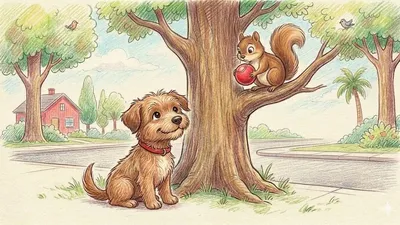
El Juguete Perdido
Boost Spanish A1 vocabulary with this adorable bilingual story about Pancho the scruffy dog navigating communication when a squirrel takes his red ball. Perfect for learning daily interactions!
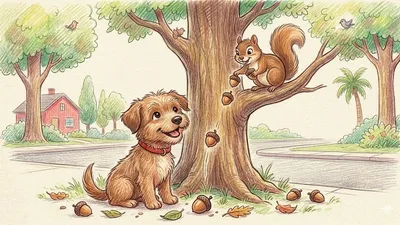
Pancho y la Ardilla Ruidosa
Enhance Spanish reading comprehension with this fun, beginner-friendly A1 story about a dog named Pancho and a mischievous squirrel. Ideal for learning action verbs and nature vocabulary interactively.
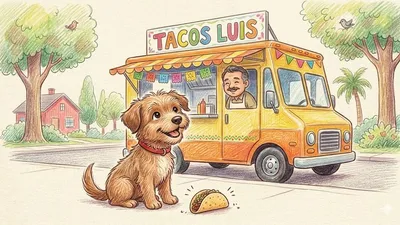
Pancho y el Camión de Tacos
Learn Spanish basics with this engaging A1-level bilingual story about a dog named Pancho who loves tacos. Perfect for English speakers improving vocabulary through fun, interactive reading exercises.